



















Ika Mirror
A Nigerian student seeking to pursue a Bachelor’s degree in Poland has raised concerns after receiving an official communication, stating that the National Examinations Council (NECO) certificate is not accepted for undergraduate admissions in the country. The student, who submitted his academic documents to the Polish National Agency for Academic Exchange (NAWA) for mandatory verification, was informed that his NECO qualification does not meet Poland’s requirements for tertiary studies.
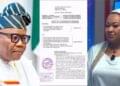
According to the appeal decision issued to her, NAWA concluded that the NECO certificate could not be recognized as an equivalent qualification for entry into Polish higher institutions. This outcome effectively prevents the applicant from enrolling in her chosen Bachelor’s program, despite meeting all additional institutional requirements.
The decision has sparked concern among Nigerian applicants who rely on the NECO qualification, which is widely used domestically for university admissions. While WAEC certificates are recognized by many European and international institutions, NECO has faced inconsistent acceptance across foreign education systems, leading to uncertainty for students who seek opportunities abroad.
Education analysts say that the rejection highlights a broader issue regarding the global recognition of Nigerian secondary school certificates. Stakeholders argue that Nigerian authorities may need to engage diplomatically with international education bodies to ensure Nigerian qualifications are better understood and appropriately evaluated.
The affected applicant described the experience as disheartening, noting that he had fully complied with Poland’s verification procedures before receiving the decision. He emphasized that the outcome should be publicly discussed so that other Nigerian students can be better informed when planning academic pursuits abroad.
Analysts also warned that the development could strain academic relations between both countries if left unaddressed.
Many have urged the Nigerian government to urgently initiate dialogue with the Polish government and relevant education authorities to clarify the status of NECO, resolve the disagreement, and prevent the matter from escalating into a broader diplomatic or educational dispute.
They argued that failure to act swiftly could result in more Nigerian students facing similar setbacks, potentially discouraging international academic cooperation. As the number of Nigerian students aspiring to study in Europe continues to rise, the Polish government’s stance on NECO may influence future application trends.
The development may further prompt Nigerian families, education consultants, and policymakers to push for strengthened international recognition of the nation’s secondary education frameworks.
For now, prospective students hoping to study in Poland are being advised to confirm the acceptability of their certificates early in the application process—particularly those relying on NECO, so they can avoid last-minute setbacks.